

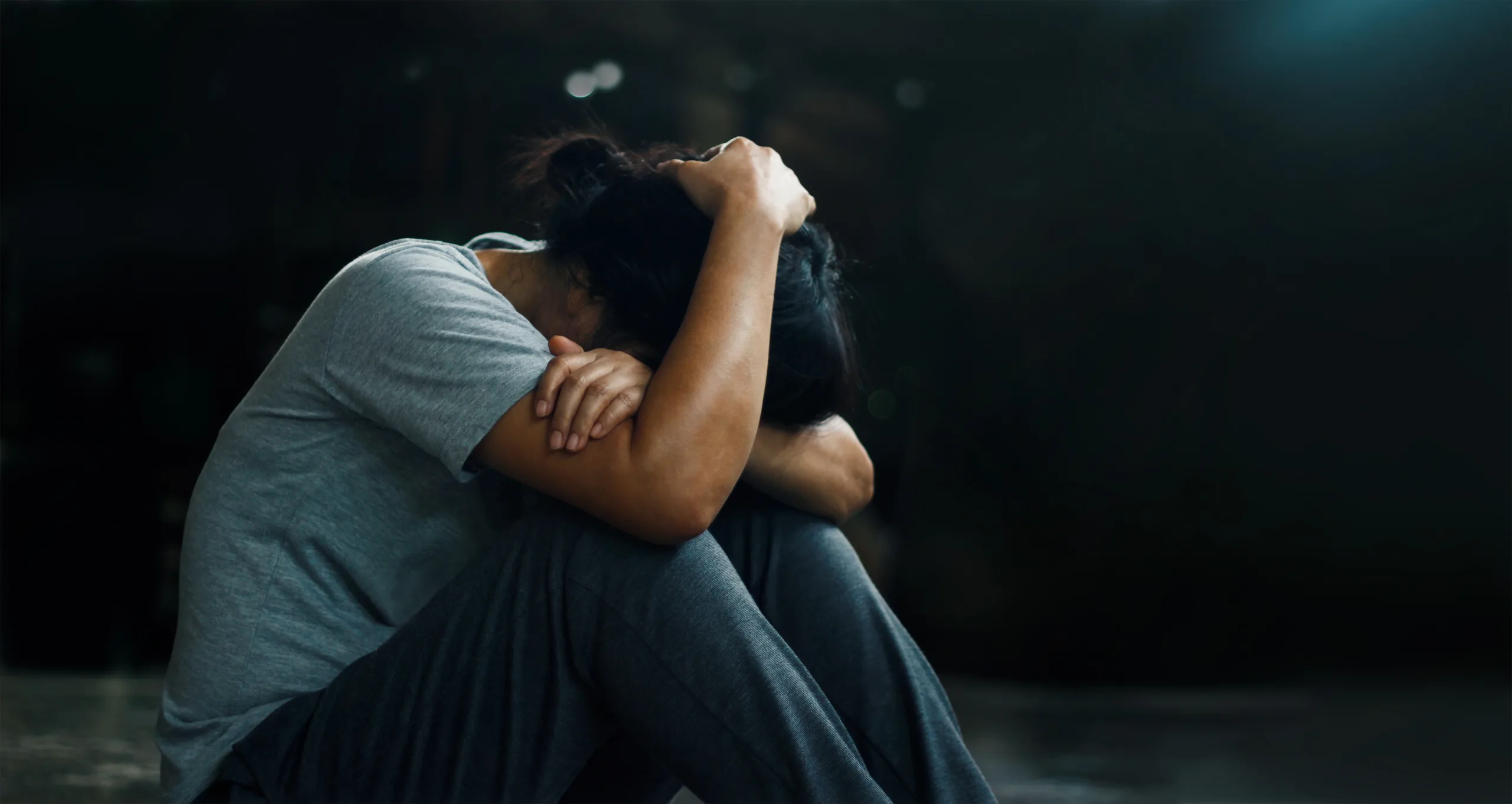
PTSD is not just about war, conflict and veterans.
Just like the veteran who carries the scars of war, others carry the scars of life….
When you hear the acronym of PTSD, what comes to your mind? Do you generally think about soldiers, war and conflict and the veterans who have suffered or are suffering. Do you feel remorse and empathy for the soldiers? We know what they have gone through is horrific – we have seen the images in the news, and we feel for their bravery and struggle. Post-Traumatic Stress Disorder is not a mental health condition only caused by war and conflict; it is not a condition that only affects veterans. Traumas do not just happen at war; trauma can happen to anyone. I am a trauma survivor, and now someone with a diagnosis of PTSD; I am a woman and I have never been to war.
Trauma is sewn into the fabric of society; it does not occur through choice, we do not sign up for it; we do not ask for traumas and we certainly do not want them. As human beings we share this commonality – we live in a world, which has the potential to leave us traumatised through external events or experiences – not just war and conflict. Many people suffer because of trauma, it is not just a veteran’s condition; post-traumatic symptoms can be experienced by anyone. It could be your work colleague, family member, friend, foe, or your children who may experience trauma, no one is immune – we are all susceptible to trauma. Even your favourite celebrity or superhero could suffer with trauma related difficulties – if you are an Avengers fan, you would have seen in Iron Man 3 Tony Stark appears to be suffering from PTSD.
Stressful events and experiences come in many guises, yet there is still this association that a diagnosis of PTSD is concerned with war and conflict. PTSD can affect the victims of war, not just those who fight the war; the men, women and children bombed out of their homes cannot always escape the catastrophic effect trauma can have. It can be seen in the victims of emotional or sexual abuse; by those who have been bullied or subjected to physical violence, the rape victim of the abused child. Even a divorce or buying a house can cause emotional trauma.
When I read about PTSD in the news or across social media and see the association with conflict and the bravery of those who go to war, I feel very alone with my diagnosis and my experience. I feel as a woman my experience of PTSD is brushed aside, and misunderstood because it is complex, layered and not about the flashbacks of terrors on the battlefield. Women can end up with PTSD, just like veterans, but can often be hesitate to seek support or their symptoms are not recognised as PTSD. Research by the American Psychological Association “indicates that women are twice as likely to develop PTSD, experience a longer duration of post-traumatic symptoms and display more sensitivity to stimuli that remind them of the trauma”. Despite the research available there is still a strong association between war and conflict and veterans.
For these reasons I feel, as a society we have to start questioning why PTSD is so commonly associated with war and viewed as the ‘mental health condition of veterans’, and notably a ‘typically male’ mental health condition. Please do not get me wrong, I am not diminishing or belittling the experience of those who have been to war. It is evident veterans do not have enough access to the therapeutic treatment they so desperately need to support their recovery. I have seen for myself the lip service given by the government and MP’s – who have a duty to provide them with what they need after sending them to war. I fully empathise with what they are going through – and they have my full support. However, some of you reading this, may have a diagnosis of PTSD and like me you have not been to war and some of you may be women, who are feeling frustrated, lost or simply overwhelmed by the effects of the condition. So, I would like to share with you how it feels to be a woman and suffer with post-traumatic symptoms and I want to tell you that there is hope and there is healing.
When left untreated post-traumatic symptoms can have negative consequences on our physical and emotional health. The long term effects of constant stress can cause illness and disease, heart attacks, conditions such as fibromyalgia, digestive problems, menstrual difficulties, skin complaints and many other health problems. Emotionally you are deregulated, out of balance and very reactive – you are in survival mode and on high alert – just like the veteran. I know many women who have suffered with past traumas – they have not been to war, but have experienced some pretty horrific things, and now have a diagnosis of fibromyalgia, anxiety and depression. The trauma was not picked up when they were young, nor did they realise that they may be suffering with post-traumatic symptoms, nor did they believe that anything could be done to help. Personally, I have experienced problems with chronic pain, fatigue, a leaky gut, IBS, problems with my menstrual cycle (when my periods started at the age of 13 they were painful and heavy) in my 30’s I was diagnosed with endometriosis and in the end an early menopause. I have in the past been highly anxious, suicidal, depressed and manic and suffered with OCD and been very heavily medicated.
Following a round of EMDR therapy in 2014 I experienced a few years of good health and well-being or sop I thought – then in 2018 I was triggered, and this was the start of a journey that would change me forever. What I was not expecting was a few days after the trigger I woke up in horrendous pain all over my body, and unable to walk very far. My body had given out on me – a lifetime of fear and stress had taken its toll and my body started to release the traumas. To be honest I have never experienced so much physical and emotional pain – it drove me to contemplate suicide; the torment I was feeling in my mind and body drove me to the edge of despair. At times I really believed the pain would kill me, but I kept going and to look at me no one could see what I was going through as I remained strong and continued with my life. Yet I was suffering and struggling in many ways. What I was experiencing was the result of untreated and undiagnosed post-traumatic symptoms – yet I had no idea at the time.
When you have PTSD, you feel trapped in prison cage of thoughts and feelings. The world can be incredibly threatening – you are hyper-vigilante and stuck in your past. If you have not processed the trauma, you can be hit by the ‘experience’ once again, at any moment; smell, a sound, a word, a sight, even a touch can trigger and once again you replay out the event as if it was happening again. With PTSD it is not just the person re-experiencing the event, but the body feels it as well as if it were just happening. It is very frightening to re-live and to feel past trauma; I have been terrified as I felt my car accident, I thought I was going to die; I have recoiled in fear as if I was being shouted at or beaten and panicked when I felt my suicide attempts rise to the surface.
Just like the soldier who hears a loud noise, or a helicopter pass overhead, and they are taken back to the war they so bravely fought in, I also get catapulted back to my past. But I have never seen or perceived myself as brave because I have not gone to war. Yet, just like the war veteran I have flashbacks. I have experienced severe flashbacks simply through touching an item of clothing in a store, a smell, and even a look on someone’s face; the flashbacks are so profound and so real, at times they knock me off my feet. I have even had flashbacks with those dreaded face-masks. The first time it happened was like a lightning bolt – now I simply cannot look at people who wear face-masks without getting shaky.
When these moments happen, I have now learnt to ground myself, to sense that I am in my environment, to breathe and to know that I am safe now. I talk to myself repeating over and over ‘I am safe, and I am in my environment’ or ‘this is temporary it will pass’. But for many years, I pushed it down, kept it at bay pushed away the effects of the trauma. My first trauma was at the age of 4 years old – I was hit by a car. In 1977 not much was really known about trauma and its effects so I learnt to mask it, to hold it in and not let it go, as a child the emotions and pain was too overwhelming, so I disconnected from my body. In order to survive trauma we disconnect from our bodies, so we do not have to feel the overwhelming sensation of emotions associated with the traumas – it gets pushed up and we live in our heads and try to think our way out of what we feel.
I actually thought it was natural to live in with the constant feeling of fear and with a head full of anger, pain and fearful thoughts – it was my default – it was my way of being – I did not know how traumatic my life was until very recently. As time progressed and I got older, more bad stuff happened, leaving me more traumatised, and more anxious, so I simply believed I somehow ‘deserved’ it because this was my ‘normal’, this was my life; so, I just got on with it and lived my life to the best of my ability. Somehow I thought I was to blame – which now I understand is quite common to feel.
As a consequence of societal labels, preconceived ideas and a lack of understanding about women and trauma, the wrong diagnosis can be given which leads to the wrong interventions and then the wrong therapeutic approaches and even the wrong meds. I have witnessed first hand many other mental health labels being given to young women, who have clearly suffered with past trauma, and I was given quite a few different labels. The students and clients I have worked with have disclosed to me the traumas of their past, and yet they are given a diagnosis of emotional instability, borderline personality disorder, or generalised anxiety and OCD and treated in this way – they are not given trauma therapy – instead they are medicated. It was evident they were either still in the midst of the trauma, or they were post trauma and not able to deal with what they were feeling because the emotions were so overwhelming. They had not been to war – most were suffering due to violence, abuse, rape and/or childhood neglect.
Various literature and research demonstrates the symptoms of PTSD can be different in men and women and too often symptoms in women are missed by health professionals due to lack of training, resources and time. Mine certainly were. Not all women who experience a traumatic event will go on to develop PTSD and symptoms can be highly personal and affect people in different ways. The common symptoms of PTSD include vivid flashbacks, intrusive thoughts, nightmares, intense distress, physical sensations such as tremors, sweating, and pain; you may be on high alert, have a sensitivity to certain stimuli, be jumpy or nervy and suffer with some anxiety and depression.
Women may be jumpier than men (I certainly can be very nervy and jump when people get too close to me) they may be more emotional or even have problems feeling and connecting with their emotions; men generally get more angry and let it out, whereas women hold it in for fear of not being perfect or not being able to cope, they may have menstrual problems and are more likely to suffer with depression and anxiety. So, it is no surprise that post-traumatic symptoms can go undiagnosed in women; most of those I have worked with were given a cheap anti-depressant, which only served to sedate them or make their symptoms worse.
I feel there is misconception about medication, and my personal view is that medication is given out too easily; it is not there to heal – it is up to us to heal. You can spend years numbing the emotional pain and turmoil with pills and potions, but eventually it will not be enough, and I have experienced this first-hand. I spent 20 years on medication and eventually I was also self-medicating so much to numb the pain, to quell the anxiety, that eventually I could not do it anymore – I simply could not continue as I was. It would have killed me – my body was toxic.
The effects of trauma can be very complex, so there is really no quick fix and medication is not a long-term solution – meds serve to numb and block out the emotional effects of the trauma – they push it down – but eventually the body and mind will want to let it go and release the pain. Now medication has its place, it really does, and it kept me alive; it kept me going for many years, but it was not the long term solution. Eventually the meds simply stopped working, they stopped numbing the pain – the anxiety got worse, and the triggers didn’t stop – it was like a bubbling furnace of emotions wanting to come out and when it did it was an explosion!
When I began researching the effect of trauma on not only my mental and emotional health, but also the physical body and took control of my treatments and therapies, my life started to change. Once I quit the medication and started specific trauma therapies I actually started to move towards healing. So, we cannot simply continue to take a medical model approach to trauma and treat symptoms with medication – you cannot ‘turn off’ the flight of flight system with a pill. It takes internal work, acknowledgment of what has happened and a commitment to heal the past hurt and integrate it into our present.
To heal is not as simple as changing your thought process, as many would have you believe. I have spent many years researching trauma to understand the nature of it, I have delved into the work of Gabor Maté, Peter Levine, Bessel van der Kolk, and James Gordon so I could fully understand the nature of trauma, so I could learn to heal both body and mind. I am not going to soft soap it, my recovery has been hard emotionally and physically – my body and mind has really suffered – I have really taken a battering, but I am still standing. I have over the last 3 years come to understand how I lived on the hormones of stress for most of my life, pumping adrenalin and cortisol round my body – I have been trapped by my traumas and re-living past moments over and over again. I had no idea until I was 41 years old that my past difficulties were the consequences of trauma – and no one told me. I simply believed my life was ‘normal’ so it was never really addressed – I just took my meds and got on with it. But I have been trapped in a body that was frozen with fear from the age of 4. I may have not been to war, but I feel at war with myself sometimes and I have felt trapped by my body and thoughts. Despite this, I am on the road to recovery because I now know what I am dealing with now – I know it is post-traumatic symptoms – I know I have PTSD, so I can address it.
I am left with fatigue and pain across my back and down my body if I get stressed; I still get flashbacks and triggers, which can at times interfere with my day-to-day living and can even cause physical pain but I now know what they are, so I can calm my body and mind. I still have digestive problems and an acidic gut which is very annoying, but I manage this with a good diet, I have eczema on my hands which flares up when stressed; a sensitivity to noise and touch, so do not enjoy many of the things I used to like live music, or nights out with friends, I have trauma tremors and some anxiety and fear. I am making friends with my body and teaching it to feel safe when I get triggered, and using activities like meditation, yoga, tapping, and breathing techniques to calm body and mind and regulate my emotions. Just like the veteran who carries the scars of war, I carry the scars of my life and just like the veteran, I am learning to live with and accept what I have witnessed and experienced whilst learning to live in a new way.
Despite my difficulties I am healing and in recovery, and you can heal and begin to recover from PTSD. However, recovery is not necessarily a simple process. It can take time, but with the right therapies, the right therapist, and permanent life changes it can be done. If the therapies are not the right ones for you, they can do more harm than good. I have spent thousands of pounds on therapies and therapists, which simply did not work – they were not trauma specialists but I have also spent thousands of pounds on therapies that do work. I now have therapists I trust who understand the complexities of trauma and know that healing is much more than simply talking about what happened. Sometimes simply talking about unprocessed trauma can make it worse sometimes because you are re- living the experience. I personally get very frustrated with the provision of CBT when it is given as treatment over and over again. It won’t work if the trauma is severe and complex – it can take years to heal the mind of the ingrained thought processes. I started my journey 8 years ago and have unpicked the complex layers of what has happened to me so I can break my survival habits and thoughts – the only to doing this is by addressing the traumas and taking responsibility for my healing.
I believe we need to move away from this one size fits all medical model and take a more holistic way of thinking about the effects of trauma on mind and body because understanding this connection is fundamental to healing and recovery. Recovery is about processing and coming to terms with what has happened to you, it is about retraining the mind and body to behave differently, it is about regulating the nervous system – the very structure we need in our body to regulate us and keep us healthy and in balance. It is about letting go of the harmful survival habits, actions, addictions and behaviours that kept you safe, it is about understanding you are OK, and the world is safe. But this takes time and patience with yourself and a good support network and healthcare professionals who understand trauma, recognise the symptoms of trauma in women, and can provide early interventions.
Specialist trauma therapies and long-term support needs to be more readily available on the NHS and well as affordable privately, and it needs to be more readily available to the victims of physical violence who live in fear, or to those who have been raped or sexually abused and unable to form trusting relationships, and to the veteran who fears for his life when he hears a car backfire. Too many empty promises are made by the government and local MPs about PTSD, what we do see is mostly aimed at veterans, and we do not see reports or positive action being taken to support women or children with trauma related mental health – even veterans get a raw deal. We need a clear and concise understanding of the long-term effects and a broader recognition of the reality of what trauma does to mind and body and the impact on the individual – male or female. Too much airtime is given to the links between veterans and PTSD, yet there is no productive approach to preventative measures. I do not see enough literature available through the NHS or health care practitioners that discusses the impact of trauma on women. There needs to be a change in how PTSD is addressed in women; we need to explore how it is treated, and how it affects women.
We need to move away from the constant media connection between ‘war and PTSD’ and understand the world is full of traumatic situations and events, and that we are all susceptible to trauma; it is part of the fabric of our society – it is ingrained in our lives. We need to look at cause as well as effect, and we need understand the role the environment plays in triggering us. We need more investment from the government and an awareness in society and health care practitioners about the long term impact of trauma and how symptoms can manifest themselves in women. Post-traumatic symptoms can no longer simply be associated with war and conflict; we need to move away a diagnosis of emotional instability or borderline personality disorder in women, when it is clear they are suffering with post-traumatic symptoms. Most importantly we need to hear more from the women who have suffered, those who have despite the odds survived – we need to hear their stories, so we can learn from them.
We will never wipe trauma out of our lives, but we can learn more and do more, and look at ways to provide the support that is so desperately needed.
Disclaimer – This article is for information purposes only and is personal views and experiences. Whilst information has been taken from reputable sites and literature this is not a substitute for individual medical advice or treatment and support for PTSD or any other related conditions. If you are receiving or taking any form of medical treatment please consult your doctor if you want to make any changes.


Leave A Comment