

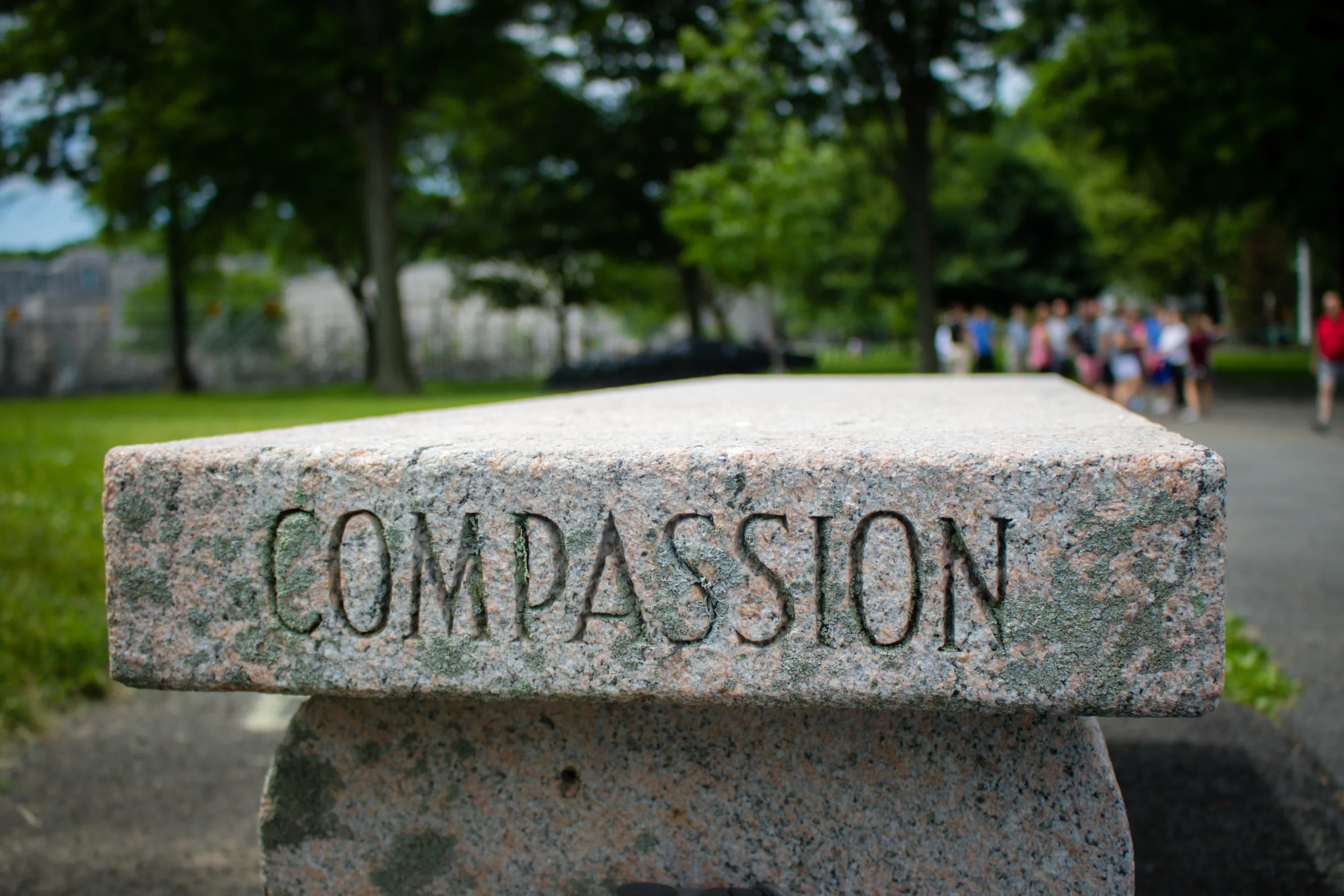
Cultivating Compassion…
How Compassionate Are You?
If we want to cultivate a more compassionate world we have to shift the compassion towards ourselves and to do this we must step away from feeding the need we have for positive self-evaluation from our external world – we have to stop looking to the external world to fix our shit! To grow, we need to acknowledge our weaknesses, stop blaming others for our inadequacies and difficulties and take responsibility for our feelings. We must stop judging and evaluating ourselves based on others’ successes – how do we do this? – by practising self-compassion.
Evolutionary Theory dictates that compassion is part of human survival, with recent research suggesting compassion is an evolved part of human nature – it is rooted in our brain and biology, and is a driver for human evolution – without compassion, we cannot thrive. Darwin (1871) argued in The Descent of Man that sympathy is our strongest instinct, stating “those communities which included the greatest number of the most sympathetic members would flourish best, and rear the greatest number of offspring” (Pg 130).
“Compassion is the basis of morality.” Arthur Schopenhauer
But in order to see ourselves positively, we have a tendency to inflate our egos by putting others down. We do this so we can feel good in comparison – it has long been assumed competitiveness, selfishness and greed are at the core of human behaviour and are drivers of potential and success. Our social media feeds are filled with competitiveness and greed inviting us to strive for more and to be more but this comes at a price – it holds us back from reaching our full potential. When we are competing we are not creating.
According to the Oxford English Dictionary, the word “compassion” comes from the Latin “compati”, meaning “to suffer with” – so compassion literally means “to suffer together.” Compassion involves feelings of kindness towards others and an opening up to the awareness of someone else’s suffering coupled with a desire to alleviate this suffering. But what about compassion towards ourselves – what does this involve? How can we open ourselves up to our own suffering and cultivate compassion within us and around us?
Having self-compassion requires more than an act of kindness towards yourself – buying flowers and a hot bath is great but very short-lived. Self-compassion and kindness are nurtured over time and achieved through how you talk to yourself, your thoughts and the actions you take to meet your needs to support your health and well-being. Self-awareness is the key driver and this takes an internal look at what you might be telling yourself.
Culivating more self-compassion in your life will take time – it will take patience and a kindness towards yourself which you may find uncomfortable. We live in an incredibly competitive society and we are pretty much surrounded by images and video of various celebs flaunting their successes which we latch onto and end up setting ourselves up to fail in our endeavours.
“If your compassion does not include yourself, it is incomplete.” Jack Kornfield, Buddha’s Little Instruction Book
Self-compassion is concerned with not judging yourself too harshly for failing to meet a set of idealised standards – whilst also recognising one’s failings. Self-compassion is not passivity or inaction, it is encouraging yourself with kindness and patience to achieve the actions needed for optimal functioning and good health and well-being. Compassionate people are not loaded with ego-driven ideas and needs.
A lack of self-compassion leads to inactivity – self-flagellation does not motivate us into action as much – we cannot motivate ourselves by telling ourselves we are stupid or incapable or that we fucked up! Very often we berate ourselves when we make mistakes, and engage in negative self-talk, we are our worst critics. Does it honestly motivate you to make the changes you want and need?
The thoughts and negative self-talk that we play out in our minds create emotions and feelings around who we think we are, and how we feel about ourselves for what we have or haven’t achieved which in turn creates actions, behaviours and choices. This then impacts creates our world and influences how successful we are in many areas of our lives – we won’t be reaching our full potential.
“Love and compassion are necessities, not luxuries. Without them, humanity cannot survive.” Dalai Lama XIV – The Art of Happiness
Having compassion for oneself often entails giving up harmful behaviours and addictive patterns, letting go of people places and things that are no longer serving us – self-compassion is encouraging oneself to take whatever actions are necessary in order to further one’s well-being – difficult or not. Compassion is about making tough decisions about our needs and following through with what is best for our well-being despite any pain it may cause.
When we start to make changes, we can often still get triggered by external factors and we fall back into old addictive patterns or habits – we might start smoking again, pick up a drink or a drug, call up the ex, eat copious amounts of chocolate, or even go on a spending binge. Then we make judgements in our mind about what we have done which can be quite severe. Our compassion goes straight out of the window! Sound Familiar?
Think about standing in front of a mirror and saying out loud some of those things you tell yourself in your mind when you make a mistake or you can’t lose the weight or when you are struggling – it certainly wouldn’t feel good or comfortable, would it? Now imagine saying those things intentionally to someone that you love and care about?
“Beautify your inner dialogue. Beautify your inner world with love light and compassion. Life will be beautiful.” Amit Ray, Nonviolence: The Transforming Power
Instead of harsh judgement and criticism turn inwards and start to explore why you think that about yourself but approach it with kindness and gentle curiosity. Instead of judging yourself for slipping back into old patterns or addictive habits and berating yourself with questions “why did I do that – I did it again – I’m so stupid” – get curious and start to enquire ‘why’ with gentle compassion.
Pause take a few deep breaths and gently ask yourself a few gentle questions such as: How can I gently alleviate my suffering? What happened to make me want to step back into old patterns? Am I feeling stressed or perhaps triggered? Do I need to take some time out? What do I need to do to get back on track?
Compassion and Curiosity feel much nicer than harsh judgement and criticism and it is far more motivating!
Disclaimer – This article is for information purposes only and is for personal views and experiences. Whilst information has been taken from reputable sites and literature, this is not a substitute for individual medical advice or treatment and support for mental health difficulties, relationship issues or any other related conditions.



Leave A Comment